How to Become an Adjunct Professor Without Teaching Experience?

A practical path for new PhDs who feel underqualified before they even apply.
You do not need years of classroom experience to get started. You need to know how to identify what counts, position it clearly, and apply with confidence.
Free. Instant access.
Practical guidance for PhDs figuring out what comes next.

When I first started applying for adjunct teaching positions, I had a confession that almost stopped me from clicking submit.
I had never formally taught a college course.
Not one.
I had a PhD. I had presented at conferences. I had mentored graduate students informally over coffee. I had explained complex ideas in academic and professional spaces.
But I had never stood in front of a syllabus with my name on it as the instructor of record.
And I almost let that single fact stop me from applying anywhere.
Maybe you have felt that too.
You see the adjunct posting. You know you have the degree. You know you understand the subject. You know you could teach. But then the doubt starts talking.
What if they ask about my teaching experience?
What if I do not have enough?
What if I am not qualified yet?
Let me tell you something I wish more PhDs understood:
You are probably not as underqualified as you think. You are just not positioning your experience correctly yet.
Not sure what counts as teaching experience?
Start with the free Adjunct Starter Kit. It will help you identify your experience, position it clearly, and begin applying with more confidence.
Free. Instant access.
Prefer to learn by watching?
On my YouTube channel, I talk about life after the PhD, adjunct teaching, and how to turn your degree into real opportunities.
Start with Doctor, Now What?
Here Is the Part No One Tells You
Most new PhDs assume adjunct hiring committees only consider candidates with years of teaching experience.
That is not true.
Adjunct roles are often filled because a department needs someone who can step in and teach a course next semester. They are not always looking for the most decorated CV in the stack. They are looking for someone who can clearly demonstrate three things:
You understand the subject.
You can communicate the material.
You are prepared to support students.
That is it.
And here is the part most PhDs miss: you almost certainly have more teaching evidence than you think. You just have not learned how to name it yet.
What Actually Counts as Teaching Experience?
When I sit down with coaching clients, I always start with the same question:
“Tell me everything you have ever done that involved explaining something to another person in a structured way.”
What comes out of that conversation almost always surprises them.
Most PhDs are sitting on a goldmine of teaching moments they never thought to include on a CV.
Here is a starter list. Read it slowly and check what applies to you:
Teaching assistantships, even if you only led discussion sections or graded
Lab assistant or methods coach roles during your graduate program
Guest lectures, even one time invitations to a peer’s class
Tutoring, paid or volunteer, especially subject matter tutoring
Workshops you led such as research methods, writing bootcamps, dissertation prep, or software training
Mentoring undergraduate students on capstones, honors theses, or independent studies
Conference presentations that show you can communicate complex ideas clearly
Training new employees, interns, or research assistants in any role
Speaking engagements, panels, keynotes, or community talks
Online content such as webinars, YouTube videos, tutorials, or course style lessons you created
Sunday school, faith based teaching, community education, or library programs
Most of my coaching clients can fill out half that list within ten minutes.
The problem was never that they had no teaching experience. The problem was that they were not naming what they already had.
Your experience may already count.
Do not dismiss your workshops, mentoring, presentations, or training experience. Hiring committees want evidence that you can teach, communicate, and support students. Much of that may already be in your background.
. . .
Want help identifying your hidden teaching experience?
The Adjunct Starter Kit helps you see what counts and what belongs on your academic CV.
Free. Instant access.
Need to hear this explained out loud?
Watch my YouTube videos for practical guidance on how to stop overlooking your own experience and start positioning yourself for adjunct teaching roles.
Real talk for PhDs ready for their next step.
How to Position What You Have on the CV
Naming the experience is step one. Step two is putting it on the page in a way a hiring committee can actually scan.
1. Create a dedicated Teaching Experience section.
Even if it only has a few entries, give it its own section. Do not bury teaching under “Other” or “Service.” Hiring committees scan for that heading. If they cannot find it, they may assume the experience does not exist.
2. Use action language, not assistant language.
“Designed and delivered a four week workshop series for incoming graduate students” sounds much stronger than “Helped with new student orientation.”
Same activity. Different positioning.
3. Quantify whenever you can.
Numbers add weight.
For example:
“Led 6 research methods workshops for 80+ graduate students across three departments.”That tells the committee you can hold a room and communicate clearly.
4. Add a Courses Prepared to Teach section.
This is one of the most underused sections on a PhD CV, and it can make a big difference. List 5 to 8 courses you could teach next semester by name and topic. This shows the committee that you understand their curriculum and could step in quickly.
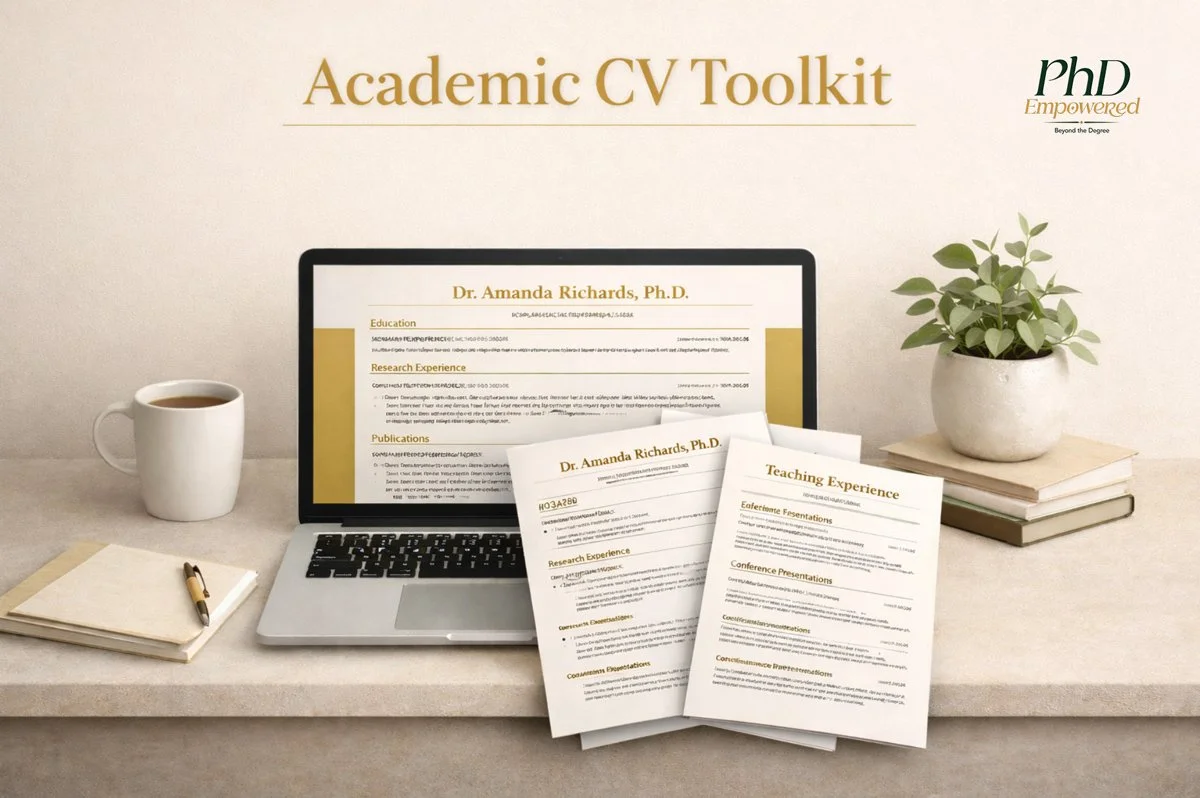
Need help fixing your academic CV?
If your CV is not clearly showing your teaching experience, academic strengths, and courses you can teach, the Academic CV Toolkit can help.
$28. Instant access.
What If You Truly Have Nothing?
Sometimes a client tells me, with full honesty, “Dr. Toya, I really have nothing.”
And we get creative.
Here is what I tell them to do, in this order, starting today:
Email a former professor and offer to give one guest lecture this semester
Build a sample syllabus for a course you would love to teach
Lead one free workshop or webinar in your area of expertise
Write your teaching philosophy this week
Volunteer to mentor an undergraduate student in your network
Within 60 days, you can move from “no teaching experience” to a CV that includes a teaching philosophy, a sample syllabus, a guest lecture, and a workshop.
That is enough to get you in the door.
You do not need to wait to feel ready.
You can begin building teaching evidence now. Small, strategic actions can turn into strong CV material faster than you think.
Need a starting point?
Download the free Adjunct Starter Kit and begin organizing your experience before you apply
Free. Instant access.
The Mistake That Keeps New PhDs Stuck
Let me say this plainly.
Waiting until you feel fully ready is not a strategy.
It is fear dressed up as preparation.
You can keep editing your CV forever. You can keep researching adjunct roles forever. You can keep telling yourself you need one more credential, one more experience, or one more perfect moment.
But at some point, you need to apply.
Adjunct hiring is not only about being the perfect candidate. It is about being visible, prepared, and positioned when a department needs someone.
That means your CV needs to be ready.
Your teaching language needs to be clear.
Your courses need to be listed.
Your application materials need to make sense.
If you are serious about becoming an adjunct professor, you cannot keep hiding behind “I do not have enough experience.”
You need to build the evidence and position it correctly.
That is the work.
Want more support beyond this blog?
My YouTube channel is where I talk about life after the PhD, rebuilding confidence, and turning your degree into opportunities like adjunct teaching, coaching, and income on your own terms.
Watch Doctor, Now What?
Stop guessing what your CV should say.
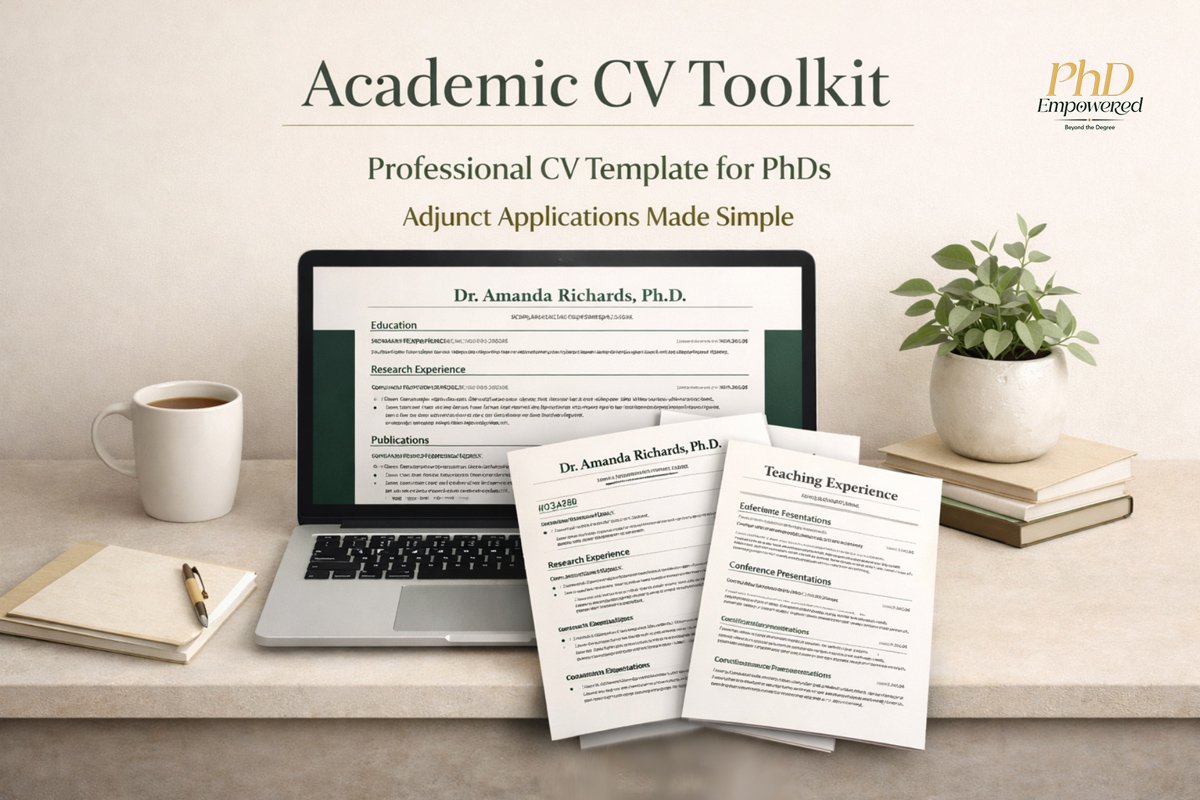
Use the Academic CV Toolkit to strengthen your application materials and present yourself more clearly to hiring committees.
$28. Instant access.
What I Want You to Hear
You did not earn a PhD by being underqualified.
You earned it by doing hard, sustained, intellectual work that most people do not finish.
The same is true here.
You are not unqualified to teach. You are simply unfamiliar with how to position what you have already done.
That is a fixable problem.
And it is exactly why I created resources like the Adjunct Starter Kit and Academic CV Toolkit.
You do not need to keep staring at job postings wondering if you are good enough.
You need a clear next step.
Ready to start applying for adjunct roles with more confidence?
Start with the free Adjunct Starter Kit to identify what counts as teaching experience and begin positioning yourself more clearly.
Then, when you are ready to strengthen your application materials, grab the Academic CV Toolkit to help you create a stronger academic CV and apply with confidence.
Free. Instant access.